Truth and Lies, and something in between
"Therefore I lie with her and she with me,
And in our faults by lies we flatter'd be."

-W. Shakespeare, Sonnet 138
Out of all the 'sins' of today, the most common, the most feared, and the most underestimated, I believe, is lying.
"To lie is to state something that one knows to be false or that one does not honestly believe to be true with the intention
to deceive others, often with the further intention to maintain a secret
or reputation, protect someone's feelings or to avoid a punishment or repercussion for one's actions."
- from our beloved Wikipedia.
(That is no longer a valid reference source for most academic papers. Sad, but true.)
- from our beloved Wikipedia.
(That is no longer a valid reference source for most academic papers. Sad, but true.)
So now that we got the definition out of the way....
We all do it. Most, if not all, of us feel guilty about it. But sadly there is nothing to be done. Sometimes lies help things go smoother, mostly white lies, the ones that don't really matter. They help things move along with minimum drama. You know the ones that I mean: "Nothing's wrong", "Yes, you look wonderful", "Yes, I'm almost finished with that assignment", "It wasn't me", "I don't know how that got there", "It's ok, it happens to everyone", and of course "Size doesn't matter."
These little lies usually don't hurt too much, but sometimes they do backfire unexpectedly, so limit their use.
But what hurts us and others more is the abnormal kind of lies.
The ones that imply betrayal, the ones that we build up on purpose and fight hard to keep. And the worst of all these are the lies we tell ourselves.
What happens then when a person lies to themselves?
It seems physically impossible to believe a lie that is told to oneself. I mean, you know you're lying. So there is no doubt.So how can you believe it? Impossible.
But how to you explain the situations in which it works?
For example, ever tried faking happiness? When you feel absolutely terrible, you can physically force yourself to smile, even if its ironic. And it works! It seems like the physical movement creates the same chemical reaction as the real thing: endorphins are released, and you feel better.
But its a lie... right?
But its a lie... right?
Another common example for women are so called modern mantras. Once just a religious thing, they're now used in an effort to help women gain more self-confidence. Repeating certain motivational phrases daily helps women. Even if they're not really true, they help. And they actually help them change, to make the statement true.
But its a lie... right?
What about lies that you don't consciously understand? Anorexia for example. Anorexic women look at themselves in a mirror and see a distorted reality, they see a lie. But it's their brain lying to them, nobody else. They're lying to themselves, creating a different version of reality.
But its all a lie... right?
I guess what I'm trying to get at is that this is not such a simple concept. Especially when we get psychological aspects involved in the discussion...
We, women especially, lie to keep ourselves happy. Often. Ironic, but true. And I can't figure out if it's a bad thing or not.
What do you think? (New feedback page available, check at the top)
What do you think? (New feedback page available, check at the top)
Seems like any sort of happiness better than being miserable, even if it is based on lies?
We create our own reality. So if we lie ourselves into believing something, after some time it becomes the truth for us. Of course this is a very sensitive issue, and it doesn't work for all things. Most importantly, it shouldn't work for all things, it's dangerous and harmful. But for some, this is a means of survival.
If you're trapped in a situation. You might as well enjoy it, or get something positive out of it, even if you have to lie or fake your way through it. And after a while you start to believe in your lies. At which point they actually stop being lies.
A bit of a controversial issue, and even I don't agree with it 100% I think, but I like pointing out these aspects. Think about it.
It's how arranged marriages work. It's how people can stand terrible job positions. It's how we deal with difficulties in relationships. It's how we make peace with our parents during conflicts. There are a lot of situations in life that you simply don't want to face in absolute truth. You look for ways to get yourself to be OK with it. And what is that if not a type of lying to yourself?
Another aspect I want to cover is how the belief in a lie can be have the same effect as the truth.
I'm talking about the Placebo Effect. For those unfamiliar with the subject, a brief overview:
"The physician's belief in the treatment and the patient's faith in the physician exert a mutually reinforcing effect; the result is a powerful remedy that is almost guaranteed to produce an improvement and sometimes a cure." -- Petr Skrabanek and James McCormick, Follies and Fallacies in Medicine, p. 13.
"A placebo (Latin for "I shall please") is a
pharmacologically inert substance that produces an effect similar to what would be expected of a
pharmacologically active substance (such as an antibiotic).The placebo effect is the measurable, observable, or felt improvement in
health or behavior not attributable to a medication or invasive treatment that has been
administered."
In simple terms, if a person believes enough in the fact that he/she is given medicine that will help them, even if they are given fake medicine aka sugar pills, the effect will be similar, or even the same as if they had been given real medication.
It's a lie? But if you believe enough that it is the truth, your body doesn't know the difference. Scary, huh?
So what can we conclude?
That things are never as simple as they may seem. Yes, lying is bad. Mostly. But sometimes it is useful, and , yes, rarely, but still, sometimes it is necessary.
But use it sparingly and with caution. Because, once caught, there will be trouble.
(And what better way to end than with a little taste of Nietzsche?)
“I'm not upset that you lied to me, I'm upset that from now on I can't believe you” -Friedrich Nietzsche
References:
http://en.wikipedia.org/wiki/Lie
http://www.skepdic.com/placebo.html
http://uk.askmen.com/dating/heidi_200/211b_dating_girl.html
http://factoidz.com/wp-content/themes/gabtheme/images/how-can-we-tell-if-someone-is-lying-to-us.jpg (photo)
Let what needs to happen, happen

"A person often meets his destiny on the road he took to avoid it." ~Jean de La Fontaine
"Fate leads the willing, and drags along the reluctant." ~Seneca
Intro
-----It has been lately pointed out to me that the tone of my writings is
somewhat feministic. Not that I don't like that, but I do want to try to make my blog a bit less womanizing, broaden the target audience a bit. So let me just switch that around a bit to just
being somewhat rebellious or radical. So hang in with me here.-----
There has long been controversy and discussion between whether a person controls his or her own life or whether it has already been predicted.
The latter bases itself mostly on religion: if our destiny is predetermined, then who determines it? Surely some higher power. And that's where God comes in.
Whereas the first bases itself on the modern notions of human superiority and domination. It's the belief that we are God(s). We are the prevalent race on Earth, everything else was made to serve us. We control our own destiny.
Right ?
It seems to me that the nature of truth is that it is always in the middle of two radical opposites. In the Ukrainian language referred to as the ''golden center''. Nothing that is absolute is really true, there are always different aspects. And both must be taken into consideration.
So what if it's a bit of both?
Honestly, to think that people are able to fully control their lives is silly. We know too little, we understand too little. We cannot know what will happen to us, or to the world, not the next day, not the next year, not even the next second. We have no control over certain things. And these things directly, or indirectly influence our little world. We cannot deny that.
So ultimately the notion that people control their own destiny is just something that we believe, because we refuse to give into the fear of the unknown factors that actually shape our destiny. We are afraid to let go and let things flow. What if they flow the ''wrong'' way? What if something was just not meant to be? How can we just give in to that? It's hard.
Now, of course this is not the absolute. I am not saying we should lay back and let life take us where we need to go. What's the point then? I believe that there are divine factors that influence our path, but we are still the ones that have to walk it. Now, maybe not EVERYTHING is predetermined. Little things are probably not. Unless they influence the big picture. Those decisions are probably monitored closely and influenced, if needed, by, let's say God, or maybe Angels. Spirits. Whatever label you prefer. Higher forces that we cannot explain or understand.
Seems like there are two aspects to this that always get me confused:
Testing and pushing away. Let me explain:
Sometimes it seems like if you really want something, you have to prove exactly how much you want it. You have to fight, through the pain, misery, maybe sacrifice, to prove that you ''deserve'' it. And there are success stories like that. Against all odds and boundaries, people do get what they want.
In other cases, it seems like the higher spirits are pushing you away from making a bad decision, from going in a direction that you shouldn't go.
My question is, how can you know the difference?
Maybe I'm taking this too far into religion and philosophy, but seriously, how can God expect us to understand His signs if He didn't send us a manual of how to interpret them?
If something goes wrong, is it a warning or is it a test?
I guess we can never really know for sure. Unless we can listen to our intuition and act on it. People have forgotten how to listen. And don't look at me like I'm crazy, it's been proven scientifically and mathematically. (read my article "Coincidence?" from 3/31/10
)
It does exist. And it could make our lives a lot easier if we knew how to listen. There are signs and answers everywhere. We just have either forgotten, or maybe we didn't really ever know how to interpret them.
Anyway, my point is, yes, we make decisions, but there is a part of our lives that we don't control. Some things have to happen, and we have to let them happen.
There was a story on the news a while back: A couple, man and woman, were late for their flight, that later crashed and everyone died. They got a car and rode to whatever place they needed to get to. And they got into a car accident. And both died. (A bit of a depressing example, but you get my point?)
I think its time that people stopped being so afraid to let go and tried to "relax into the unknown." Let go of all the
fear that is holding us back.
It's okay to trust in fate, in the hope that everything will turn out perfectly. Really.
Credits: http://rebekahsimpson.wordpress.com/2009/05/05/trust-and-let-go/, http://www.sloclick.co.uk/images/20050921091213_footsteps_sm.jpg
Love is Unconditional. But should it be?
"To give and not expect anything in return, that is what lies at the heart of love."
~ Oscar Wilde
"Truly loving another means letting go of all expectations. It means full acceptance.."
~ Karen Casey

(image from http://www.magnusmagazine.co.uk)
There is a common understanding that true love, pure love is blind. Unconditional. It is love simply for the sake of love. And we are taught that this is a good thing, something to aspire to.
But is it really?
What we are actually saying is that "I don't care what happens, I will love you anyway". Now, as much as I respect such bravery of putting your heart out there, what I want to ask is, is it always worth the risk?
"I felt like a fool. I had gone so far out on a limb with my feelings that I didn't realize I was standing out there alone." - Carrie (Sex&theCity)From my perspective as a woman, and obviously the only perspective I will have in this life, I would say that it's dangerous. Saying ''I will love you no matter what" not only shows your vulnerability, but also presents a temptation, a challenge almost, to test how far this statement can be pushed. Where is the limit? or is there one at all?
Of course, when we love someone we (women especially) will forgive faults, imperfections, small mistakes. Or at least I believe we should. If you love someone, those things don't, or shouldn't matter. You might not even notice them. Or if you do, in comparison to all the good things and positive aspects of your relationships, little set-backs loose their importance.
But where do we draw the line?
This coincides a bit with one of my previous articles on forgiveness. When is it okay for love to be ''blind'', and when are we just being stupid and allowing ourselves to be manipulated?
Maybe im a bit biased by being a woman, but I really think it's possible that men and women love differently. I think maybe it's because women are much more afraid of being left alone than men are, or maybe, because men traditionally control relationships, they feel like they can get one anytime, because women are almost always willing. Yes, they might have to work on it a bit, but usually women are willing. And women, feeling helpless, and feel like they are unable to control their lives, tend to cling. Yes, its not the happily ever after we were taught to wait for. But its close enough. Or it's better than having nothing at all. We will endure it.
But there has to be a line.
But how do we decide where to put it? When is it okay for love to be unconditional, and when isn't it?
Things change. It's scary as hell, but sometimes things change. We must not be blind to it.
And also sometimes the bad things are there for a reason. Sometimes they are trying to show us something, either that something is wrong with us, with them, or with the situation.
If we ignore the negatives, we can never work through them. If we ignore the negatives, we can never learn from them. They will just be there, growing, nagging at our subconscious, until finally they explode and destroy everything.
There is always black and white in everything. If we try to paint over the black with white, it may give the illusion, but it will still be black underneath. All we're doing is postponing.
My point is, yes, we must love for the sake of loving. But loving blindly harms the relationship. Conflicts and problems are necessary! They're healthy. Perfect relationships are a) impossible b) dishonest c) boring.
If everything is perfect then something is wrong, as much of a contradiction as that is.
''Relationship Prep'' or ''Being Complete and Staying that Way''

“When we're incomplete, we're always searching for somebody to complete us. When, after a few years or a few months of a relationship, we find that we're still unfulfilled, we blame our partners and take up with somebody more promising. This can go on and on--series polygamy--until we admit that while a partner can add sweet dimensions to our lives, we, each of us, are responsible for our own fulfillment. Nobody else can provide it for us, and to believe otherwise is to delude ourselves dangerously and to program for eventual failure every relationship we enter.”
- Tom Robbins
I've been thinking, and a have a theory I want to share. On why relationships don't work out. And why it is actually sometimes our fault.
Going through our everyday routines, we end up feeling an emptiness spreading from the bottom of our stomach to our hearts. An emptiness that pushes us to search for meaning, for something special, something that would make us feel complete.
And we've been taught that relationships can do that. Having someone special around gives our lives meaning, makes us feel special. Puts us in a process, life is going somewhere. It gives us someone to care for, someone who is not obligated so stick around like family is. But we get into these relationships with the wrong reasons, wrong expectations and wrong agendas.
We expect the person to fulfill us, fill in the blanks in our lives. Give it meaning.
But its just not possible.
No I'm not being cynical. Just realistic. Another human
being can not make us complete. And when we go into a relationship
expecting that, it ruins any chance that relationship can work long
term.
We have to make ourselves as complete as possible, before getting into a serious relationship. Our lives have to be full. Not so full that we don't have room for more, of course, but they have to be complete. Work, family, friends, money, social activities. And we have to deal with our emotional baggage. We all have experiences that have traumatized us, changed our way of thinking, influenced who we are. We have to deal with that, not bring all that into a new relationship. very rarely can the only way of dealing with something being having another person help you to heal. First we have to get ourselves in working condition.
Only then should we try to connect our lives with another person. That way you are simply adding to your life, not trying to fill your life with your new bf/gf. And the person that you do bring into your life should be relatively complete too. So then it's a cooperation, not parasitism.
If you get into a relationship expecting completion, what you're really starting to do is your starting to feed off your partner's energy. Trying to cover up your emptiness with their care and attention. But it doesn't last, sort of like drugs. The emptiness comes back and you need more and more. Or another possibility is that you're getting into the relationship to "spice up your life". Get some excitement in your boring life, feel like your moving somewhere. That's doomed too: after a while the 'new relationship excitement' wears off and when it becomes 'comfortable', it gets boring, routine; you start searching for drama, or you start doubting your partners and yours compatibility.Doomed.
I'm into metaphors nowadays, so let me explain using visuals:

Healthy relationship: Both people are complete, so they can share their lives and work together.

Unhealthy relationship: parasitism; One person trying to make themselves feel complete. Ultimately leads to exhaustion of the partner that is complete, frustration on the part of the other.

Unhealthy relationship: Confusion; Partners not sure who they are or what they want, simply entering into a relationship with different emotional baggage, expectations, fears. Ultimately get tired of trying to make their lives 'fit' together.
Another point, when we do get into a relationship, we should understand what we're getting into, what we're investing, what we should expect, from both sides. Like a contract. Seriously, would save us so much trouble, misunderstandings, pain. Just say it! Why is talking so difficult? Why waste time second guessing and wondering? Just talk things out before you commit, so you both know what to expect. So simple.
There is such a thing as too much of a good thing. Some girls, who do wait for a good relationship opportunity, when they find it, they explode all the built up caring energy. Explode to such an extent that they freak out their boyfriend, become over bearing, over caring, and ultimately suffocate all the energy out of the relationship. Which relates to what I started with: being complete. And staying that way. Don't give up your life for your partner. Time spent apart or alone is okay. Actually, its very healthy. It gives you time to refuel, so you come back to the relationship with new energy.
And one more thing. No matter how many failed relationships you go through, never loose hope. Because hope is everything. Don't let the past damage your future. Look at everything as an experience, and move on to bigger and better things.
Casualization of Intimacy, or, R.I.P. Love
"Sex relieves tension - love causes it." ~Woody Allen

"Sex without love is an empty experience, but as empty experiences go it's one of the best." ~Woody Allen"Love is a matter of chemistry, but sex is a matter of physics. " ~Author Unknown
Now, I expect this to stir up some controversy, because I am about to attack a subject that seems to be the most popular and best thing since, oh I don't know, since chocolate maybe. But seriously, I missed the memo. When did sex become a casual part of life? Free of emotions, attachment, or relationships? When did sex lower itself down to the level of routineness of brushing your teeth? Honestly...
Now, I am not a supporter of abstinence, God forbid. But what is going on in society nowadays is just disgusting. And I have to say it. Women have become sick of being treated as sex objects, so they have decided to let men treat them as sex objects, and they started to like it, so they turned the tables around: started acting like men, using them for sex. Surprised? Or did you think only men had needs?
Statistically, women think about sex up to 34 times in an average day, that works out at the equivalent of once every 14 minutes. For men, the number is, on average, about every 6 seconds.
OK. So for some reason people are naturally very horny all the time. But that doesn't mean that hooking up randomly is the only rational solution.
And I do not believe in all that bullshit people say to try to prove that its ok: that its just for fun, that its just 'fucking', that its an easy substitute for intimacy for people who don't have time to commit. Please.
Sex is the most intimate way for people to connect, the only way for them to experience something so deep and I won't even be afraid to use the word spiritual, for them to actually, physically, be one. And what people do with it, they lower it down to such a low level of just rubbing body parts together and exchanging fluid. Its sad. Its like taking yoga poses and performing them in a strip club with people masturbating.
Some things should be kept sacred. I don't think its necessary to cover the normal reasons, aka STDs and pregrancy, or emotional trauma. It's more than that. I just can't understand how people can detach like that. How can you allow a stranger, sometimes a complete stranger, be so close and intimate, know your body, be with you in moments when you are completely beyond rational control of thought. It seems that its unnatural for women, being that are naturally prone to being loving and nurturing, to be so detached. It's like we shot anesthetic into our hearts. If we can't find love, this is the next best thing, eh?
But why, why should we sell ourselves so cheaply? We do we not hope, expect for something special? Why are we not prepared to wait for it?
Now I am not against sex. It's actually a very healthy activity. Even scientifically:
More and more studies are showing increased
emotional and physical benefits from frequent safe sex.
- Lower mortality rates.
- Reduced risk of prostate cancer.
- Improves posture.
- Boosts self esteem.
- Makes a person feel younger.
- Firms tummy and buttocks.
- Keeps spouses connected emotionally.
- Offers pain-relief.
- Gives people a positive attitude on life.
- Reduced risk of heart disease.
- Makes a person more calm.
- Improves fitness level.
- Makes a person less irritable.
- Reduced depression.
- Improved sense of smell.
- Has a therapeutic effect on immune system.
- Better bladder control.
- Relieves menstrual cramps.
- Helps people sleep better.
- Improves digestion.
- Healthier teeth.
- Helps improve memory.
- Produces chemicals in the brain to stimulate the growth of new dendrites.
- Lowers the level of cortisol, a hormone that can trigger fatigue and cravings.
- Lowers feelings of insecurity.
- Increases level of commitment.
- Less-frequent colds and flu.
- It can help people achieve weight loss since about 200 calories are burned during 30 minutes of active sex.
- Studies are also showing that it is a myth that abstinence can sharpen a person's competitive edge.
I will say again, I am no way against sex. I actually think I have a much higher sex drive then I should, but I, not because of religion, or what my family says, or whatever. I, just for me, am prepared to only engage in it with someone who I care about. Someone who will not disappear the next morning. But instead might bring me breakfast. And you know for sure he will be rewarded double. Some things have to be worth the effort. More effort = more reward.
“Women are like apples on trees, the best ones are on the top of the tree. The men don't want to reach for the good ones because they are afraid of falling and don't want to get hurt. Instead, they just get the rotten apples from the ground that aren't so good but easy. So, the apples at the top think something is wrong with them, when in reality they are amazing. They just have to wait for the right man to come along, the one who's brave enough to climb all the way to the top becuase they value quality.”
Why have we lost faith in love? Why do we go searching for the lower, easier ways to achieve pleasure? Is love not worth the effort anymore? I didn't get the memo, really. Must have gotten lost. Everybody else seems to have got it. Men aren't even shy about asking for sex anymore. Damn, in Ukraine, you're likely to be asked for sex from complete strangers on the street from 1-10 times daily. Other cultures are a bit more discrete- they might buy you a drink first and tell you you're pretty. The worst kind are those who fake an effort, take you out, be nice to you, AND THEN drop the casual sex offer. When you say no, all of them disappear just the same, though. So it seems like its nearly impossible to tell the difference. Until you do. And when you do you'll know it. And you'll finally understand that it was worth it. And you may regret having given away so much of your love for free. So just think twice. And never loose hope. Love will find you, you just have to be ready to accept it into your life when it does.
Now, just for fun, here are some statistics:
Durex Survey (2003) Highlights:
Forgive me?

"Most of us can forgive and forget, we just don't want the other person to forget that we forgave." - Ivern Ball
"The weak can never forgive, forgiveness it the attribute of the strong." - Gandhi
The ability to forgive is one of those famously good attributes that all people believe they should have. It has been taught to us since we were children that it’s a good thing to do. But ultimately, why should we forgive? Or should we forgive at all? Are we ever obligated to forgive? What are the limits of forgiveness? Are some things simply unforgivable?
Let's
start simple: what is does it mean 'to forgive'?
· to
grant pardon for an offense
· to
cancel an indebtedness or liability
Ultimately,
forgiveness is simply letting go of the past and moving on. Whether it is a
selfish act (forgiving just to make yourself feel better), for the sake of the
relationship (out of love, or out of helplessness), or for the sake of the person,
forgiveness is absolute. Letting go of the past, with no strings attached.
In
the purest sense of the term, forgiveness is also an act of non-reciprocity.
That means you forgive people out of the kindness of your heart, not expecting
anything in return.
But
how realistic are those ideas nowadays?
In
the official system of laws there is no forgiveness: a person does something
wrong, they are punished. End of story. Anything different is an exception
to the rule. And usually, it is either illegal, or debatable.
But
what about in our everyday lives? In relationships? In the family? People make
mistakes all the time, and sometimes those mistakes are serious, but they are
forgiven. But the same rule works: forgiveness is an exception. Theoretically
offenses must be punished, always.
In
everyday lives there is the idea of "Forgive and Forget", and there
is an endless debate going on about whether it is right to do both, one, or
none. Men say that women forgive, but never forget. Which means they forgive
mistakes, but if the opportune moment arises, they bring it up and use it. And
men complain that that is not fair. But is it really?
We
are taught to learn from our mistakes, but if we forgive and forget, what will
stop the offenders from repeating the offense? What will protect us? Where is
the line between being generous and forgiving, to simply being easy to
manipulate and used? If we forgive too much, people stop being afraid to make
mistakes. If there is no punishment, then what makes a something bad different
from something good? Unless we count moral values, then practically nothing.
Punishment is vital. It makes the system work.
If
we forgive too much, we have the risk of making people too tempted to do whatever
they want, without any fear. So is forgiveness worth the risk? What makes it
worth it, love? Fear?
Women
seem more prone to forgiveness. For the same offense, women will forgive much
easier than men. Mostly I think they will do this for the sake of the
relationship. It seems like women are much more afraid to mistakes and ruin the
relationship, maybe because they are afraid of being left alone. Not exactly
sure why, maybe they are subconsciously aware of the fact that there are less
men than women in the world? Or they are just so happy once they find a man
that is good enough, and just want to hang on to him, no matter what? But men
seem like they can let go easier, and not regret it in the long run. That's one
thing I envy them for.
But
in some cases I think people are too forgiving. I think, because of fear or
helplessness, or because they want to do the 'right thing', people forgive
things they really shouldn't. For example, violence of any kind, cheating, or
similar domestic ''crimes'' should not be forgiven. Because they are not about
the situation in which they were committed, they are either relationship or
psychological issues, which cannot be resolved easily and will almost always be
repeated. Out of love, maybe, they may be forgiven once, but if any such
offense is repeated, then it is unforgivable. No exceptions. Follow the rule.
People,
of course, must strive to be kind and generous, but ultimately, we are not
angels, and we are not God.
Actually,
about God: the idea that can be seen in most religions is that God is all
merciful. He loves His children, and we must repent our sins, ask for forgiveness,
and our sins will be forgiven. In Christianity this is called absolution; and
traditionally it has even been practiced to give out “absolution certificates”,
which were supposed to guarantee forgiveness. I will refrain from commenting on
the oddness of this, but I will point out one thing: if God is all merciful,
then why is there the whole idea of heaven and hell? And the fear of committing
sins? If we can all be forgiven out of pure love, then what’s stopping us? Do
now, apologize later, no?
I
believe that people cannot, and should not be all-forgiving. We must protect
ourselves and get out of harmful situations while we can. We deserve happiness,
and we must not let the ideas of how we ‘should’ act to be considered ‘good’
people get in the way. After all, we are only human. We make mistakes. But we
should be smart enough to tell the difference between when it is the right
thing to do, and when it is not. And not be afraid to act on our decision.
“Frühjahrsmüdigkeit” (Or more commonly known as “Spring Fever”)
“In springtime, love is carried on the breeze. Watch out for flying passion or kisses whizzing by your head.” ~Terri Guillemets
What is going on?
Although
the official medical causes of spring fever have not yet been fully identified,
doctors and scientists agree that it has to do with hormones. According to this
theory, in the springtime, when the days become longer and warmer, you're being bombarded by pleasant, exciting, new
stimulants, such as sunlight, vibrant colors, warmth, smells, and the body
readjusts its hormone levels, and more endorphin- “the happiness hormone”,
testosterone and estrogen are released, which affect both your mood, your
libido, the way you feel, even the way you look. Testosterone has been accorded
vast powers by scientists, as the libido hormone, the aggression hormone and
the dominance hormone. But ladies, don’t think this does not affect you!
Testosterone levels affect both male and female libidos. (Thank God)
As soon as temperatures
start to climb, we start shedding clothing and showing skin. Yes, it’s
practical, because of the weather, but it's also display behavior, a sort of
subconscious sign that you’re trying to attract a “mate”, — like the peacock flaunting
its tail. The days are longer, and the weather is nice, so we spend more time
socializing, so there is ample opportunity for mate-hunting. So the
consequences are not surprising.
But spring is not
just about the weather getting warmer. It is a simple miracle, which we take
for granted: it is a full rebirth of nature. Spring is the time that everything
comes back to life. And what says “life”, more than love?
“To live fully is to let go and die with each passing moment, and to be reborn in each new one.” Jack Kornfield
So, take a chance, and enjoy the moments full of
joy and bliss that spring gives us! Go lie out on the grass, drink some
ice-coffee from your nearest Starbucks (nothing makes me happier than a
Frappuccino) And be sure to spread the love and happiness to your friends and
family. Just like “misery loves company”, the opposite is also true: smiling is
addictive, and also highly contagious. So go ahead… there is never enough
happiness in the world.
Addicted to Artificial Happinesss

Each
and every one of us, at a certain point in our lives has faced a
problem that we were unable to easily deal with. These things catch us
unexpectedly sometimes and throw us completely off balance. At this
point we have to choose a way of dealing with the problem. There are
many choices, but, usually, it's much easier to go for the easy
solutions: to avoid it, to cover up problems with artificial happiness.
Now,
let me be more clear. I want to discuss the generally accepted idea
that certain substances, for the lack of a better word, “addictions,”
can help us solve our problems.
First
of all, I do not wish to criticize people, nor am I trying to say these
things are bad or good. I would just like to ask, why is it, exactly,
that so many young people nowadays rely on substances as a source of
happiness? Is it purely psychological? Most of these substances come
with warnings of being harmful or fatal. But people continue to indulge
in them. Why? What draws young people to these things, like a moth to
the flame?
Let's
first look at the obvious reasons, the benefits: these “addictions”
provide us with relief. They help us relax, focus, forget about our
problems, lose control. We become more sociable, more fun, more
confident. Now these excuses I can understand: our lives are full of
stress, and people psychologically associate happiness with these
stimulants. So, yes, they work. But the mind is such a powerful weapon!
If you associate anything else with happiness, it will work for you. And
it doesn't necessarily have to be an investment or be harmful. But,
perhaps we just like the danger and feeling of rebellion?
There
are many theories that explain such consciously destructive behavior.
Some are created by scientists and some by psychologists. (Somehow the
two never seem to agree.) Scientific theories say that some people are
genetically prone to addictions.
“It is not I who become addicted,” said J.Cocteau. “It is my body.”
It's
my personal opinion that the body and mind have to be in harmony. They
are a part of one system, and cannot be separated. So this theory is
irrelevant: The problem is not why people continue, but why they
started. Find the source of the problem, not the consequences.
So…why?
Always the same answers: enjoyment, boredom, social pressure. But
people will never really tell you the deeper reasons, perhaps because
they are not aware of them themselves. We have become lazy, forgotten
how to find happiness naturally, we are afraid of confronting our inner
problems. Unhappy? Low self-esteem? Loneliness? Feeling the need to be
accepted? Work through your problems. Change your perception of the
world. Evolve. Yes, lighting up a cigarette will make you feel better,
but only for the moment. Life is precious, and we are in it for the long
run.
Now,
I would like to mention that, of course, we are not angels. And being
young is mostly all about enjoying and experiencing life to the fullest.
But, whatever you do, make sure it is your own conscious decision, not
something you were pressured into socially or culturally. Stay safe.
...Coincidece...?
“Trust yourself. You know more than you think you do.” -Benjamin Spock
A very frequent
theme in my reflections, articles, blog posts, etc. is the general and complete
distrust we have towards ourselves and to our bodies. From the very simple
things, such as stuffing ourselves full of medicine at the slightest hint of an
illness, to not trying to interpret its signals and pushing it way beyond its
limits. The medicine topic I will cover sometime later, but what I want to
point out now is the general distrust, the contradiction between our minds and
hearts. The fact that we believe that we know better and more than our higher
‘I’, that only contacts with us through dreams, signs, hints, feelings,
warnings. The little voice in the back of your head, your guardian angel, the
‘gut’ feeling, third eye, your intuition, whichever you prefer. But these signs
are rarely something like a gigantic flashing neon billboard with the word
“stop” and fourteen exclamation marks. These things are on higher levels of
understanding, dealing with higher energies. So they are subtle. We have to be
open and know how to listen and interpret them, or else we might miss them.
It is fact that
intuition, or a way of obtaining higher knowledge exists. Scientists all around the word have been
studying this phenomenon, of “knowing without reasoning”. Countless tests and
examples exist, from laboratory testing, of guessing drawings on cards without
looking at them, to the countless predictions that psychics have made throughout
time. If you research, you will find that nearly every singe major catastrophe
has been predicted by psychics or a medium sometimes 10 or even more years
before the event actually happened! But because of people’s cynical outlook on
this, the predictions were ignored and the events occurred. The most famous
examples are perhaps Nostradamus and Vanga, who predicted the 9/11 attack on
the USA, the beginning of the World Wars, the death of Princess Diana, as well
as others.
But if you don’t
believe in that, let’s take a scientific approach: it has been proven
statistically, that airplane flights, or any other mode of travel for that
matter, that are doomed to crash have an unusually low number of passenger
turnout: many passengers change their mind at the last minute, many are late,
as opposed to successful trips, when passengers fly without hesitation and are
on time, its always at least a 15% difference. What influences the people to
miss the doomed trip? Coincidence?
Also a pretty
famous example: the novel “Futility” by Morgan Robertson, which tells the story
of a gigantic ship called the Titan, that crashes into an iceberg and sinks.
Curious thing is the novel was published in 1898, which is 14 years before the
actual Titanic was built, and sank. Coincidence?
What about the
predictions or tests I mentioned before? They cannot be coincidences: from
algebra we know that there is a certain coefficient of probability, which tells
of how likely an event can occur. Well it has been calculated how probable it
is that so many of the predictions will come true, or the probability of
guessing cards without looking. The results are much, much higher than they
should be. Mathematically it cannot be a coincidence. There has to be a
separate factor influencing the events. Fate? Intuition? This is where
scientists shake their heads. Because to be able to see the whole picture we
must look outside the box of materialistic and scientific thinking. Most people
nowadays believe in God, unquestionably, without any real materialistic proof.
Why is it then so hard to believe that there are higher forces that we can use
to make decisions, guess future events, etc? And if we can believe in them,
then, why are we so afraid to trust in them? Why are we so afraid to trust
ourselves?
“It is through science that we prove, but through intuition that we discover.” Henri Poincare
I see you (?)
“The voyage of discovery is not in seeking new landscapes but in having new eyes.” Marcel Proust
Question:
What is truth? What is beauty? What is love? What is sacred?
The
eternal questions, the answers to which people have been trying to find
for as long as we could think. And still we are unsuccessful.
But
the answer may be much simpler than we think.
Answer:
It is whatever we believe it to be.
Ever
had an argument that you couldn't win? About something very simple,
like the temperature? In the same room some people will feel warm, some
cold, some okay. So who is right? People have a tendency to state their
opinions and feelings as facts, but we take for granted the most obvious
aspect of human nature: the fact that everything we know is not fact
after all, but simply our perceptions of things. Everything, without
exception, before we can understand it, is put through a filter of our
senses and beliefs.
“Six blind men came to an elephant. Somebody told them that it was an elephant. The blind men asked, ‘What is the elephant like?’ and they began to touch its body. One of them said: ‘It is like a column.’ This blind man had only touched its leg. Another man said, ‘The elephant is like a rope.’ This person had only touched its tail. Similarly, he who touched its trunk or its belly talked of it differently.” - Hindu tale

Who
is right, who is wrong? Or is the truth really the sum of the
half-truths of all the men?
The
way we think depends on so many factors it seems shocking that people
ever agree on anything. It depends on our physical, sensory
perceptions, to non-tangible factors such as our culture, traditions,
expectations, experiences, our mood or the general context. This
explains why people perceive the same things differently, starting from
the very simplest levels such as color and temperature, to more complex
things such as politics, religion, even love.
Through
these factors we form our viewpoints and opinions, and then we form our
own idea of "common sense.”
“Common sense is the collection of prejudices acquired by age eighteen.” Albert Einstein
This
statement throws a clear problem into focus: our perceptions of the
world, once formed and backed up by arguments and experiences, are very
hard to change. But what do we do, then, if our views are, I try to stay
away from the word “wrong,” but how about, “harmful”? For example,
prejudices or stereotypes.
You
may be surprised at how hard it is to break through these barriers,
especially if they have been built up about a certain culture or a
country, for long periods of time.
I
believe that to be able to truly see the world we must be aware of these
differences in viewpoints, be aware of our own filters and prejudices,
keep an open mind. We must be respectful of past knowledge and
experience and add our own to them, without taking any one viewpoint as
the absolute truth, always questioning, thinking for ourselves and
striving for equality and liberation of the mind in all aspects of life.
PUBLISHED, BILNEWS, MARCH 16TH 2010, PAGE 5
Nothing is Impossible
“To live is the rarest thing in the world. Most people exist, that is all.” - Oscar Wilde

Our
existence on Earth is temporary. Fact. We have a limited amount of
time, but also an unlimited amount of opportunities of how to spend it.
So, it is shocking to me then to observe exactly how many people live
their lives in passivity, refusing, or perhaps simply being afraid, to
take control.
As children our lives
are planned out for us by our parents or guardians. We live in a
passive state, because we do not yet have the freedom to choose. But
once we hit puberty, things start to change. Everybody has a breaking
point, in which the world suddenly goes from pink and fluffy to full
color, contrast, saturation and all that. We realize that we are able
to think and decide for ourselves. But for some strange reason, not
many people take full advantage of this power. We accept stereotypes,
rules and prejudices; we let ourselves be carried along with the flow.
And if we do use our power, we usually use it to protest against rules,
to do things we shouldn't, etc. Just because we can. But this is only
one aspect of this power, and not a very positive one at that.
Nothing is impossible.
In
other words, with a lot of drive and effort, anything is possible. But
why then so we let these opportunities slip by? Our lives, the time we
have is the most important thing we have, how can we be lazy about it?
"Every day, God gives us, as well as the sun, a moment when it is possible to change anything that is causing us unhappiness. The magic moment is the moment when a "yes" or a "no" can change our whole existence. Every day, we try to pretend that we do not see that moment, that it does not exist, that today is the same as yesterday and that tomorrow will be the same too. However, anyone who pays close attention to his day will discover the magic moment… a moment in which all the strength of the stars flows through us and allows us to perform miracles."
(By Paulo Coelho, from "By the river Piedra I sat Down and Wept")
We
settle into a routine, our safety blanket, and shut everything else
out. Because of Fear. It is the strongest force that holds us back. We
are afraid of the new, unusual, unknown. Because we cannot categorize
or stereotype something we haven't experienced, it doesn't fit in our
minds, so we push it away. We're afraid to make mistakes, of failing,
or regretting our decisions later.
But what are mistakes anyway? And who has the right to judge?
Why do you think that even YOU have the right to decide what was a mistake and what wasn't? How
do you know? You don't ever, ever see the Bigger Picture, of how
something terrible could have set of a chain reaction that lead to
something wonderful. You can only guess, regret, worry, etc. But what
for? You can think of what could of, should of, would of happened, but
in the end its simply a waste of precious time.
We make decisions. Every minute of every day. With these decisions we control the course of our lives.
Of
course there must be both good and bad things, mistakes are
unavoidable, but we must do the best we can, strive to be the best we
can be. If we never try we will never succeed. If we always retreat we
can never have victory.
So, what are you waiting for...?
So, what are you waiting for...?
(PUBLISHED: BILNEWS, MARCH 3RD 2010, PAGE 5)
Learning to think for ourselves part2: What is love?
Disney Gave Me Unrealistic Expectations about LOVE
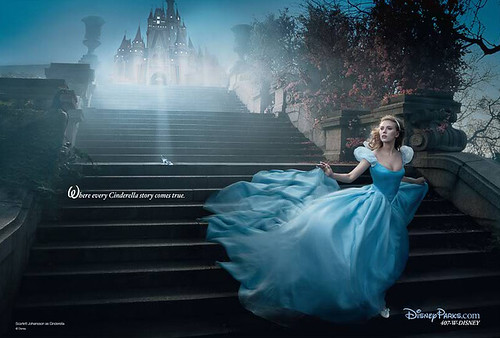
Thank you Disney for teaching us that:
Glass slippers and pumpkin carriages are comfortable,
Meeting strangers in the forest is a good idea,
Difficulties and obstacles don't drive men away, but inspire them to pursue you even more,
Swapping your voice and family for a pair of legs is a good deal,
 If you love them enough, love will transform beasts or ugly frogs into gorgeous Princes,
A man will fall in love with you at first sight if you look pretty enough,
Men will change when they grown up and fall in love,
If you suffer and do nothing long enough a Prince will come along and save your ass,
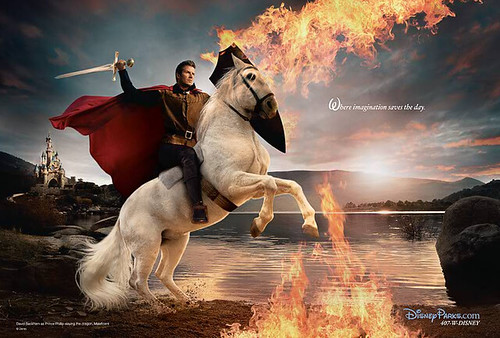 Never give in on the first try, women have to be difficult and hard to get. and hard to understand.
Men never feel you up when kissing. ((Or move. Or use tongues.))
Cleaning and cooking is a fantastic way to spend your life,
Parents never understand the reality of things,
Beauty=good, ugly=bad.
Be beautiful and life will be great, people will love you.
Be beautiful and life will be great, people will love you.
and many more.
So.
What is love anyway?
What is love anyway?

"If, from our childhood on, the examples of love were not there inviting us to copy them, would we know what "loving" means?" -Milan Kundera, The Torn Curtain.
Ever found yourself actually searching for someone to crush on? Have certain criteria, search, ask around, then find them and start bombarding that person with your emotions? Can we really ever love a person who we don't know intimately? Because if we don't know that person, if we haven't seen the true them, their souls, how can we say that we love them? Do we simply love the idea of them, our perception of them? We take people, and make them fit into our fantasy of how love should work, turning away from the things that don't fit, filling in the blanks, and concentrating on our perceptions.
Are we just constantly trying to play out our own fantasies without pausing to remove the filter, the pink glasses from our eyes and actually see the real picture?
Going back to the quote, if we were not shown/told those horrendous lies by the Disney corporation on what love is, would we perceive it differently?
------Would women still believe that their role is to be passive, to wait, to be the one who is pursued endlessly, the damsel in distress, the Princess?
------Would women still believe that men have to be macho-men, brave, fearless, the pursuer, the savior, the Prince Charming on a White Stallion?
Or would we have different ideas on how this whole thing should work?
More realistic ideas?
Really, Disney dug us a very deep hole to fall into right after childhood.
Once we grow up and get our reality checks, we hit rock bottom. It just doesn't make sense in our minds, everything we've been taught before just doesn't seem to work. We blame ourselves, or make excuses. But simply, we've been fed lies.
Time to grow up, ladies.
Chances are, that there is no Prince Charming coming to get you from the damn tower. So learn to walk on your own.
Don't expect this perfect scenario. All you'll get is pain and dissapointment.
Now, of course I'm not saying that romance is dead, or that men are incapable of love.
What I'm saying is that if you ahead of time, set up this screenplay of how exactly things should go, what is the Right Way, then you're just doomed. There is absolutely so way any human being can live up to your standards. So don't expect them to.
Besides, if it isn't rough, it isn't fun. The complications and imperfections are what make the relationships work in a way, they make them real, they give them the opportunity to grow and improve.
Why teach kinds stuff that they will have to relearn later? Why simplify things just so they get shocked out of it by how weird and complicated everything really is? Why drill these expectations into their brains and shut out other possibilities or variations? Why is it impossible to love an ugly person? A fat person? A person of the same sex? This is possible, but it comes as such a shock, because we were not shown that option. It was simply never offered to us as kids.
So why not get them really ready for what's out there but set them up for pain and disappointment? Or is that a natural part of life? Or have we just gotten use to it so much that we simply believe that its a natural part of life?
Think for yourself. Make your own decisions and opinions. Don't simply accept what's been offered to you on a platter.


BY THE WAY...
While we're on the whole Disney Theme, a modern artist recently drew a more grown-up version of the Princes.. take a look: (hint: they're wearing nothing but undies.. mmm..)
http://community.livejournal.com/ohnotheydidnt/39849010.html#cutid1


 Posts
Posts


